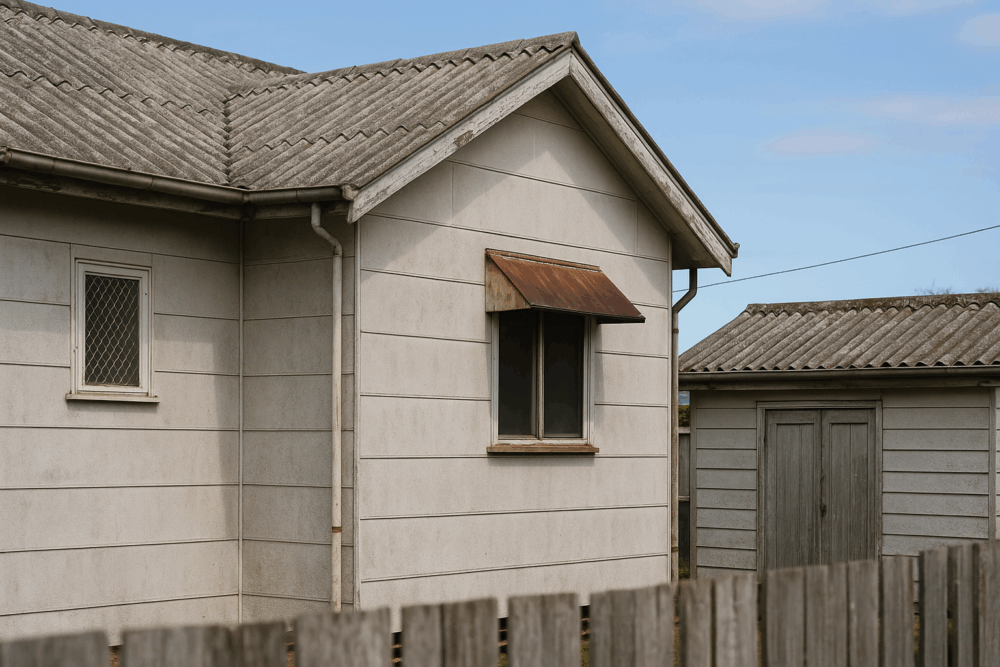


Asbestos warning signs aren’t what most people expect to see on the way down to a surf beach. But that’s the situation at Seaford this month, after asbestos-containing materials (ACM) were confirmed at the old fisherman’s caves, as InDaily reported on 9 October.
For us at Adelaide Air Monitoring, the story is a good reminder of something we see every week. Asbestos didn’t disappear when it was banned. It’s still in our homes, our workplaces and, as it turns out, along our coastline.
What happened at Seaford
The Seaford caves were hand carved by local fishermen to store boats, nets and heavy gear out of reach of the tides and weather. In the 1960s, shelters, ramps and other structures were built around them from concrete, corrugated metal and a mix of other materials.
On 21 September, SafeWork SA contacted Onkaparinga City Council after inspecting the area and flagged that asbestos might be present. Council brought in an independent asbestos specialist, and sampling completed on 25 September confirmed it.
Council says it wasn’t previously aware of asbestos at the site. The caves will now be added to a Contaminated Land Register.
Is the beach safe?
According to council, yes, the beach itself is fine to visit. The caves are a different story. Council’s director of operations, Matt Buckell, told InDaily it is “never safe to enter the manmade caves or stand near the cliff base”, mainly because of the risk of collapse.
Signs telling people to stay out of the caves were already in place, and extra signage about the asbestos has now gone up.
Our advice is simple: take the signs seriously. Don’t go into the caves, don’t pick up or kick around broken sheeting or debris, and keep kids and dogs well clear of the area.
Finding asbestos isn’t the same as being exposed to it
Buckell also made a point we’d back up: the presence of asbestos at a site doesn’t, on its own, mean anyone has been exposed. The health risk comes when fibres get into the air and are breathed in.
Asbestos material that’s intact and left alone is generally low risk. Problems start when it’s weathered, broken, crushed or disturbed. Old sheeting that’s been sitting in salt air, wind and eroding cliffs for 60 years is exactly the kind of material that breaks down over time.
That’s why a visual inspection only tells you part of the story. The only way to know whether fibres are actually in the air is to measure them. It’s good to see that airborne fibre monitoring has started at Seaford alongside the collection of materials, because that’s what turns guesswork into real data.
Not just Seaford
Council was upfront that Seaford isn’t a one-off. Aldinga, Port Noarlunga and Sellicks Beach all have sites where old shacks were built and later demolished, with material resurfacing from time to time as the coast erodes. Similar fisherman’s caves were also carved elsewhere along the Fleurieu Peninsula, most notably at Port Willunga.
In May last year, a storm uncovered exposed asbestos sheets at an Aldinga Beach coastal reserve. That material is thought to have come from shacks that were knocked down and illegally dumped back in the 1960s.
Council manages known sites with periodic collection rather than digging. It says excavating for buried asbestos would be largely guesswork and could damage culturally and environmentally sensitive parts of the coast, along with vegetation and infrastructure.
With erosion ongoing and storms getting no gentler, it’s reasonable to expect more finds like this along our southern coastline in the years ahead.
The bigger picture in South Australia
The use, manufacture, import and sale of all forms of asbestos has been banned in Australia since 2003. But it was used widely in homes and commercial buildings right up until the mid-1980s.
Australia was one of the highest users per head in the world, thanks to asbestos’s heat and fire resistance and its value as an insulator.
The numbers show it’s far from a thing of the past. SafeWork SA figures quoted by InDaily show 5848 asbestos notifications in 2024, up 57 per cent on 2019. That year, 642,666 square metres of asbestos was removed across the state, and more than half of it came from residential properties.
If asbestos is turning up on our beaches, it’s certainly still sitting in plenty of older houses, sheds and workplaces around Adelaide and regional SA.
Keeping the health risks in perspective
Breathing in asbestos fibres can lead to serious diseases, including mesothelioma, asbestos-related lung cancer, asbestosis and pleural disease. Together these cause around 4000 deaths a year in Australia.
That said, a single, incidental exposure carries a very low risk. If you’ve walked past the Seaford caves, there’s no need to panic. The real danger is repeated or ongoing exposure, which is why proper handling, monitoring and testing matter so much on worksites, renovations and demolitions.
What to do if you find suspected asbestos
Whether it’s on a beach, in a backyard or behind a wall you’re about to knock out, the steps are the same.
- Leave it alone. Don’t touch, break, sweep or bag it yourself.
- Keep people and pets away from the area until it’s dealt with.
- Report it. On public land like beaches and reserves, contact your local council. For workplaces, contact SafeWork SA.
- Get it tested. On your own property, a licensed assessor can take samples and confirm whether it’s asbestos before any work starts.
- Do removal properly. Use a licensed removalist, with air monitoring during the job and a clearance inspection once it’s finished.
How Adelaide Air Monitoring can help
The Seaford response shows exactly where air monitoring fits in. Once asbestos has been found, the questions that matter are whether fibres are getting into the air and whether an area is safe to use again. That’s our core business.
Airborne asbestos fibre monitoring. We measure fibre levels in the air before, during and after asbestos work, so workers, residents and neighbours know the job is being done safely and any problems are picked up early.
Clearance inspections and air testing. Once removal is finished, we inspect the area and test the air to confirm it’s safe to reoccupy, giving you the documentation you need to move on.
Whether you’re a builder, property manager, council or homeowner dealing with older materials, we can help you get clear answers backed by real data.