

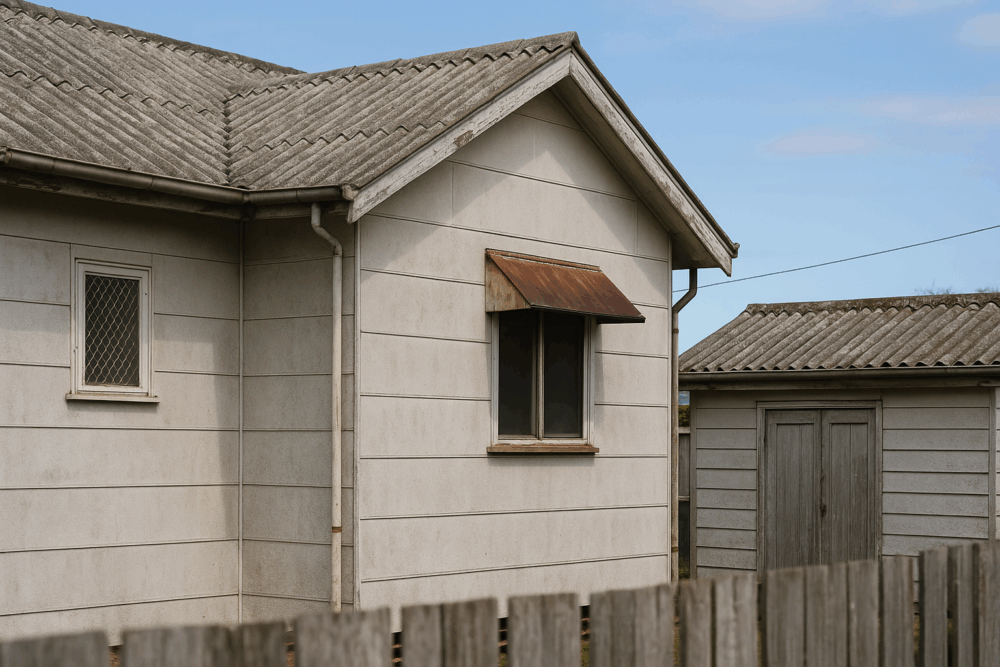
Every November, National Asbestos Awareness Month rolls around with the same reminder: asbestos hasn’t gone away just because it was banned. It’s still sitting quietly inside thousands of older Australian homes, waiting for a renovation project, a DIY weekend, or even routine maintenance to disturb it.
A recent article from Architecture & Design shines a fresh spotlight on the problem, and it’s a timely reminder of why asbestos air monitoring remains so important.
Asbestos didn’t disappear… it just became harder to see
If a home was built or renovated before 1990, there’s a good chance asbestos-containing materials (ACMs) were used somewhere in the structure. Most people picture the classic “fibro” house, but asbestos was far more widespread than many realise. It was used in:
- wall sheeting
- backing for vinyl floor tiles
- eaves and roof sheeting
- fencing and outbuildings
- insulation and fireproofing zones
- textured coatings and adhesives
The danger isn’t the presence of asbestos on its own. The real risk begins when people drill, cut, sand, demolish, or even unknowingly crack these materials. Once fibres are released into the air, they can be inhaled and that’s where long-term health problems begin.
Why homeowners and DIY renovators are most at risk
The article points out a growing concern: more people are renovating older homes themselves. This trend creates a perfect storm of good intentions and hidden hazards.
Most DIYers don’t have the training to recognise ACMs, and many don’t know what’s safe to disturb. Airborne asbestos fibres are impossible to see, smell, or taste. By the time you realise something is wrong, exposure has already occurred.
For families living in older homes (especially those upgrading a studio, refurbishing a spare room, or updating old flooring) this lack of awareness can place everyone in the household at risk.
The long shadow of asbestos-related diseases
Mesothelioma and other asbestos-related illnesses can take decades to appear. That delay often makes the danger feel abstract or distant. But once exposure happens, the consequences are real and irreversible.
This is why asbestos-safe practices matter during every renovation, no matter how small.
Where air monitoring fits into the picture
Air monitoring is one of the strongest lines of defence when asbestos may be present. It brings clarity to situations where guesswork should never be an option.
During asbestos removal or demolition, professional air monitoring:
- measures fibre concentrations in real time
- ensures control measures are working
- confirms the air is safe for workers and residents
- provides independent documentation for peace of mind and compliance
It’s the difference between assuming everything is fine and knowing it is.
For homeowners, builders, and trades, air monitoring is essential for:
- renovations in pre-1990 structures
- demolition of garages, sheds, or extensions
- removal of old vinyl tiles or backing boards
- updates to bathrooms, kitchens, and laundries
- any job where dust and debris could disturb hidden ACMs
The call for greater public awareness
The Architecture & Design article echoes what we see every day in the field: many people still underestimate the risk. They also underestimate how easily asbestos can be disturbed.
Awareness is the first protective step. Professional support is the second. When both are in place, the risk drops dramatically.
A safer way forward
Older homes carry charm, character, and history but they often carry asbestos too. Before you cut, drill, sand, or demolish, it’s worth taking a moment to think about what might be hiding behind the wall or under the floor.
If you’re unsure, bring in licensed professionals. If asbestos removal is required, make sure air monitoring is part of the plan. It protects workers, homeowners, neighbours, and everyone who sets foot on the property.
As the article emphasises, the danger with asbestos is silent and invisible. But with the right precautions, knowledge, and independent monitoring, it’s a danger we can safely manage.